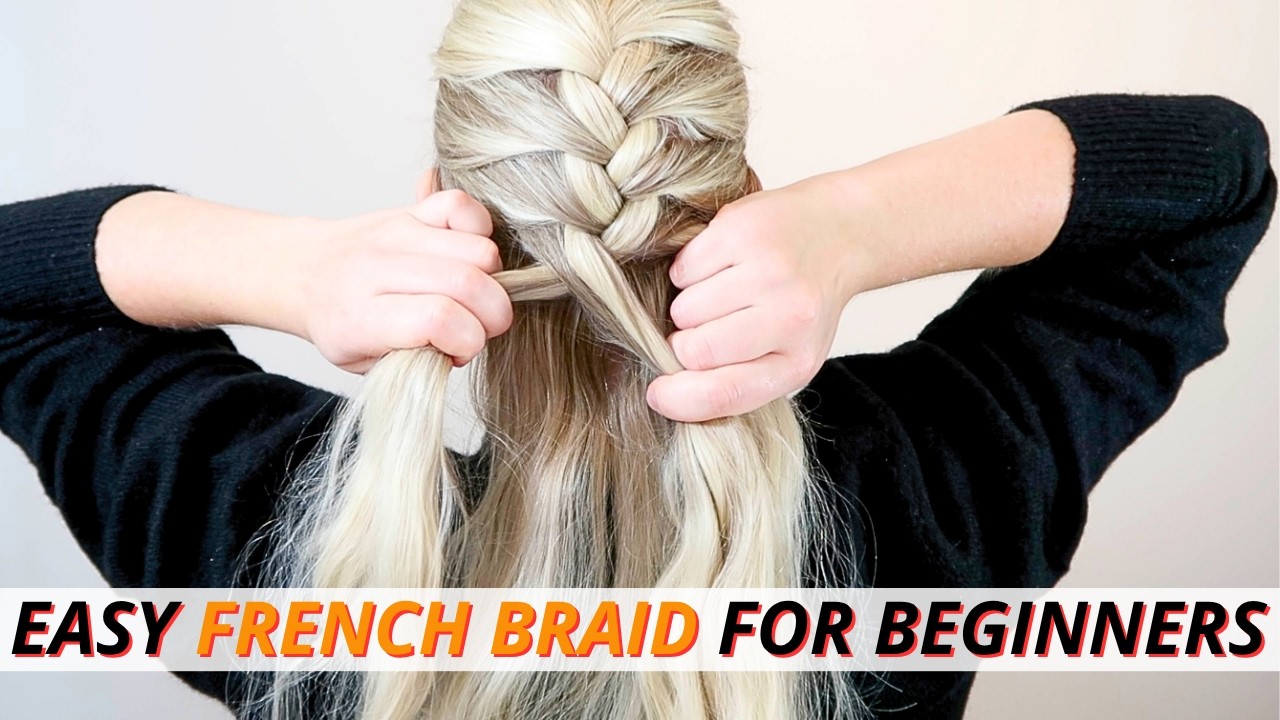
Master French Braids: Easy Steps for All Hair Types & Lengths
The French braid stands as a timeless and elegant hairstyle, revered for its ability to create a polished, sophisticated, and effortlessly chic look. It's a style that transcends trends, offering both beauty and practicality. For many, the intricate appearance of a French braid might seem daunting, leading to the assumption that it's a skill reserved for professional stylists or those with an extra set of hands. However, mastering
how to French braid your own hair is a highly achievable skill that, once acquired, becomes a go-to for countless occasions.
This comprehensive guide will break down the technique into easy-to-follow steps, revealing that this classic protective style is suitable for everyone, regardless of your hair's length, texture, or type – be it long locks, a short crop, kinky-curly texture, or stick-straight strands. Beyond its aesthetic appeal, a well-executed French braid can help maintain the health of your hair by keeping it tucked away and protected from environmental stressors. Get ready to transform your tresses into an impressive accessory and earn major compliments, often in just a matter of minutes.
Prepping Your Hair: The Foundation for French Braid Success
Before you even think about sectioning your hair, proper preparation is paramount. This crucial step not only makes the braiding process smoother and easier but also contributes to the longevity and neatness of your finished braid. Think of it as laying a solid groundwork for your masterpiece.
One common myth is that you need "greasy" hair to braid. While day-old hair often has more grip than freshly washed, super-sleek strands, you don't have to wait for your hair to feel oily. Instead, leverage the power of styling products to achieve the ideal texture and hold.
*
Product Power-Up: A small amount of leave-in conditioner or mousse worked through your strands can work wonders. These products help to smooth out any flyaways, add a touch of grip, and make the hair more manageable, preventing it from slipping through your fingers. This is particularly beneficial for those with fine, straight hair, where the lack of natural texture can make braiding a challenge. Alternatively, a light mist of hairspray or texture spray can also provide the necessary hold without weighing the hair down.
*
Targeted Application: The length of your braid influences where you should focus your product application. For shorter braids, applying more product near the scalp and top sections is key to preventing them from unraveling too quickly. For longer braids, extend the product application down to the ends to protect them from splitting and keep the braid looking neat from root to tip.
*
Curly & Coily Hair Considerations: If you have tight curly or coily hair, you have a couple of options. While not strictly required, blowing your hair out before braiding can make the process easier by reducing shrinkage and providing a more stretched canvas to work with. However, many prefer to embrace their natural texture, which also creates a beautiful, textured French braid. Experiment to find what works best for your hair and desired look.
Choosing Your French Braid Style: Single, Double, or Beyond?
One of the beautiful aspects of the French braid is its versatility. You're not limited to just one style; the number of braids you choose significantly impacts the overall look and feel.
*
The Classic Single Braid: For a timeless, elegant look, a single French braid is your go-to. To start, hair expert Bobby Tochterman advises taking a clean, manageable section of hair from the forehead, extending back towards the crown. This section will be the starting point of your braid.
*
Chic Double French Braids: Also known as pigtail French braids, this style offers a youthful and trendy aesthetic. Robin Groover suggests parting your hair either directly down the middle or with a low side part, then dividing your hair into two equal sections. Each section will then be braided independently.
*
Impact of Braid Size: Groover also highlights how the size of your braids influences the final outcome. "Large braids give a fuller look; small to medium braids are tighter and have less frizz," she explains. Consider your hair density and desired effect when deciding on the size of your starting sections and the amount of hair you add with each pass.
*
Achieving a Super Sharp Part: For those who desire a meticulously neat and defined part, Groover shares a pro secret: "The secret weapon is tracing the part with [gel or edge control] for shine and a detailed finish." This not only creates a crisp line but also helps to smooth down any flyaways along the part. This small detail can elevate your French braid from good to gallery-worthy.
The Core Technique: Step-by-Step French Braid Mastery
Now, let's dive into the practical steps of
how to French braid your own hair. Remember, practice makes perfect, so don't be discouraged if your first attempt isn't flawless! These steps apply to each individual braid if you're attempting multiple.
1.
Isolate Your Starting Section: Begin by taking your initial section of hair (forehead to crown for a single braid, or the front top section for one of two double braids). Divide this section into three equal strands: a left strand, a middle strand, and a right strand. Hold these firmly but gently.
2.
Begin with a Standard Braid Pass:
* Take the
right strand and cross it over the
middle strand. The original right strand is now in the middle position.
* Next, take the
left strand and cross it over the new
middle strand. The original left strand is now in the middle position. You've completed one standard braid pass.
3.
The French Braid "Add" Technique – Freeing a Hand: This is where the French braid truly begins. After the initial cross-overs, gather all three strands into your non-dominant hand (e.g., your left hand if you're right-handed). Use your fingers to keep the strands separate: your pinky might hold the left strand, your middle finger the middle strand, and your index finger the right strand. This technique frees up your dominant hand (e.g., your right hand) to incorporate new hair.
4.
Adding Hair from the Sides:
* With your dominant hand, reach down and pick up a small, even section of loose hair from the right side of your head, adjacent to your existing right strand.
* Combine this new section of loose hair with your existing right strand. This combined, thicker strand is now your "new" right strand.
* Cross this new, combined right strand over the middle strand.
5.
Repeat on the Other Side:
* Now, shift the strands again so your dominant hand is free to work on the left side.
* Pick up a small, even section of loose hair from the left side of your head, adjacent to your existing left strand.
* Combine this new section of loose hair with your existing left strand. This is your "new" left strand.
* Cross this new, combined left strand over the middle strand.
6.
Continue the Pattern: Keep repeating steps 3-5, working your way down your head. Each time you cross a side strand over the middle, you add a new section of loose hair to that side strand first. Try to add consistent amounts of hair with each pass to maintain an even braid.
7.
Transition to a Regular Braid: Once you have incorporated all the loose hair from the sides of your head, you will be left with three main strands. At this point, simply continue with a standard three-strand braid down the remaining length of your hair.
8.
Secure Your Braid: Fasten the end of your braid with a hair elastic.
For a deeper dive into the basic mechanics and visual guidance, you might find additional resources helpful.
How to French Braid Your Own Hair: A Step-by-Step Guide offers more detailed insights into perfecting your technique.
Advanced Tips & Troubleshooting for a Flawless Finish
Even after mastering the basic steps of
how to French braid your own hair, there are always ways to refine your technique and tackle common challenges to achieve a truly flawless finish.
*
Maintaining Even Tension: One of the biggest secrets to a neat, professional-looking French braid is consistent tension. If you pull too tight on one side and too loose on the other, your braid will look uneven. Aim for firm, but gentle, tension on all three strands throughout the entire braiding process. This is where the finger separation technique (pinky on left, middle finger on middle, index finger on right) comes in handy, allowing you to feel and adjust the tension of each strand independently.
*
Smoothing Flyaways: Pesky flyaways can detract from an otherwise perfect braid. Before braiding, ensure your hair is well-detangled. During and after braiding, a small amount of edge control, hair gel, or a targeted spritz of hairspray can smooth down any stray hairs. Using a fine-tooth comb or even a toothbrush sprayed with hairspray can work wonders on the hairline.
*
Adding Volume and Texture (Pancaking): For a softer, more voluminous, or "boho" French braid, once you've secured the end, gently pull on the outer loops of the braid. This technique, often called "pancaking," loosens the braid and creates a wider, fuller appearance. Start from the bottom and work your way up, pulling gently and evenly.
*
Hair Type Specific Adjustments:
*
Fine Hair: As mentioned, more product (mousse, texturizing spray) is key for grip. Braiding hair that is slightly damp (but not wet) can also provide more control.
*
Thick Hair: You might need to take smaller starting sections and add smaller amounts of hair with each pass to avoid a bulky braid. Ensure your sections are very clean to prevent tangles.
*
Curly/Coily Hair: Embrace your texture! If you choose not to blow out your hair, ensure it's well-moisturized and detangled. Work with small sections to manage shrinkage and define the braid.
*
Exploring Variations: Once you're comfortable with the classic French braid, challenge yourself with variations like the Dutch braid (where you cross strands *under* the middle instead of over, creating a raised, 3D effect) or a front French braid (which starts near the hairline and frames the face). The skills you've developed are highly transferable.
For more expert advice on achieving perfect definition and hold, explore our article on
French Braid Your Own Hair: Pro Tips for Perfect Grip & Parts.
Conclusion
Learning
how to French braid your own hair is truly an essential skill that empowers you to create elegant, protective, and versatile hairstyles for any occasion. From a casual day out to a formal event, a French braid offers a polished look that is both impressive and surprisingly easy to achieve with practice. By understanding the importance of proper hair preparation, choosing the right style for your desired outcome, and diligently following the step-by-step technique, you'll soon be weaving your way to beautiful braids. Don't be afraid to experiment, be patient with yourself, and remember that every braid is a step towards mastering this classic and captivating hairstyle.